Fried Brown Rice with Crispy Tofu, Bok Choy, Corn, and Tomato
The single biggest reason home cooks fail at fried rice is moisture, not flavor. Brown rice's bran layer is a hidden advantage — it resists clumping and lets you skip the day-old-rice rule.
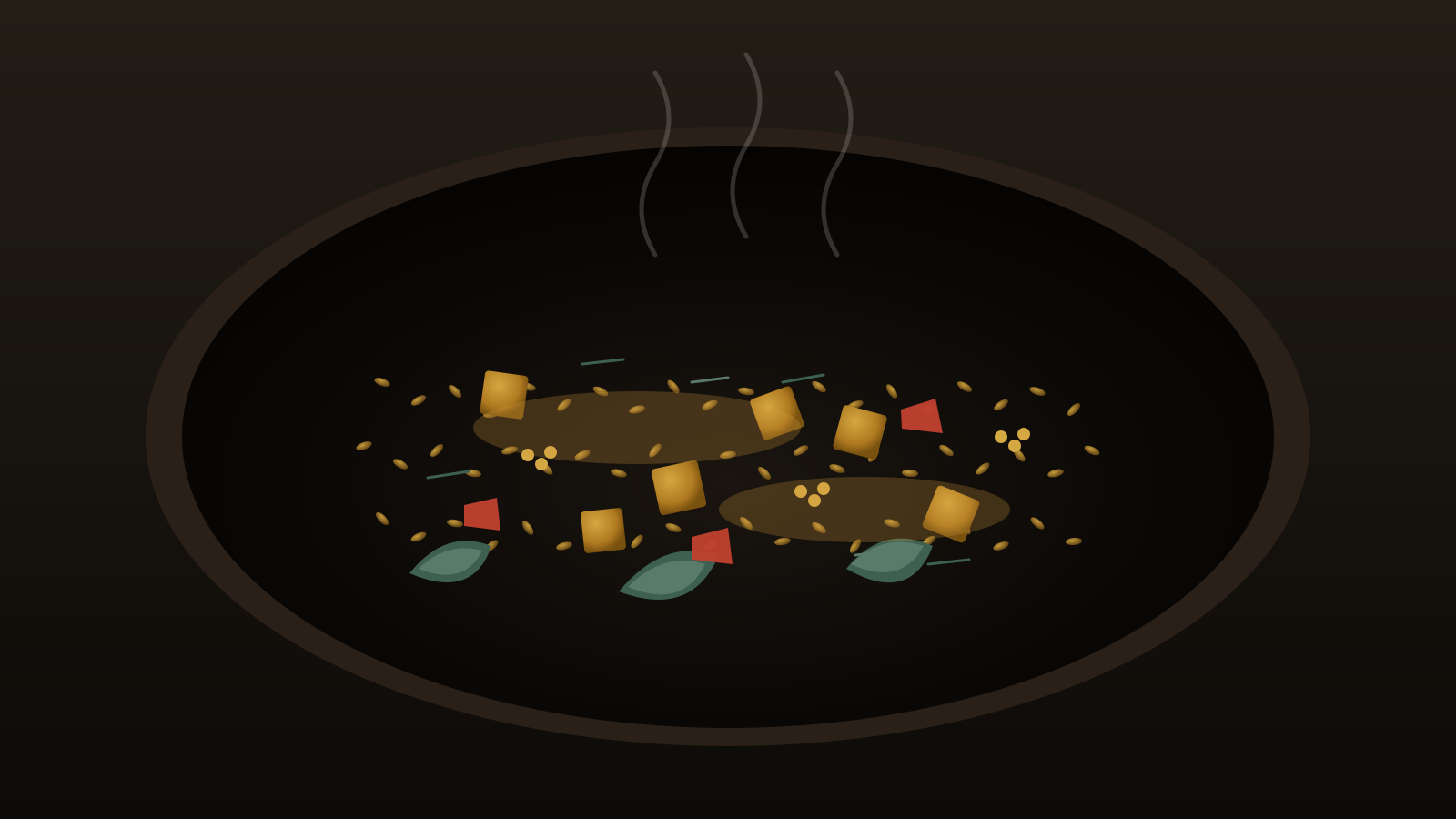
Ingredients
Steps
Spread cooked brown rice on a sheet pan and let it dry, surface-up, for 30–60 minutes. Brown rice's bran layer resists clumping, but a dry surface is still the difference between frying and steaming.
Press the tofu between paper towels under a weight for 15 minutes. Tofu is 86% water — any surface moisture will turn your wok into a steam bath. Cube it, then toss the cubes in the cornstarch until evenly coated; shake off any excess.
Prep every other ingredient and set it within arm's reach of the stove. Stir-frying happens in minutes — once the wok is hot you cannot pause to chop.
Heat a 14-inch carbon steel wok (or heavy cast-iron skillet) over high heat for 2–3 minutes until it smokes lightly. Never use nonstick — it degasses above 500°F.
Add 1 tablespoon of the oil and swirl. Add the coated tofu cubes in a single layer with space between them — do not crowd. Sear undisturbed 3 minutes until the bottom releases cleanly and is deeply golden, then flip and sear 2–3 minutes more. Remove to a plate.
Return the wok to high heat. Add ½ tablespoon oil. Add the bok choy stems and the corn — the densest, lowest-moisture vegetables go first. Stir-fry aggressively for 2 minutes, letting some char develop on the stems.
Add the bok choy leaves and toss for 30 seconds, just until they wilt. Remove everything to the tofu plate.
Add the remaining ½ tablespoon oil and the scallion whites. Let the whites sizzle for about 15 seconds — their oils will infuse the fat.
Add the brown rice and press it flat against the wok with your spatula. Leave it undisturbed for 30–45 seconds so individual grains touch the 400°F+ metal and brown. Toss, redistribute, press flat again. Repeat for 3–4 minutes until you hear a distinct crackle (not a sizzle — crackling means surface moisture is gone and Maillard browning has started). Season with a generous pinch of salt.
Drizzle the soy sauce around the wok's perimeter, not into the center — so it hits the hottest metal and caramelizes instantly into smoky umami. Toss for 15 seconds.
Reduce the heat to medium-high (sugars above 350°F will burn in seconds). Add the hot teriyaki and toss for 30 seconds so it glazes without scorching.
Add the sweet chili garlic sauce and toss 20 seconds more until everything is glossy and sticky.
Return the tofu, cooked vegetables, and diced tomato. Toss everything together for 30 seconds — tomatoes go in last because their 94% water content would have killed the browning earlier.
Remove from heat. Drizzle the sesame oil over the top and scatter the scallion greens. Toss once, gently. Serve immediately — wok hei is fleeting.
Notes
The science, in brief
Water boils at 212°F (100°C). Browning — the Maillard reaction — doesn't begin until 280°F (138°C). A wet wok is a steamer, not a fryer. Every technique in this recipe exists to keep surfaces dry and the wok screaming hot.
Brown rice's free pass. When cooked rice cools, its starch retrogrades — amylose chains reassemble into tight crystals and grains dry on the surface. That's why restaurants demand day-old rice. Brown rice doesn't need it: the intact bran layer does the same job, preventing clumping and sealing moisture in. Same-day brown rice works — but 30–60 minutes on a sheet pan to let surface steam evaporate still helps.
Wok hei at home. Commercial wok burners put out 100,000–210,000 BTUs. A home burner delivers 8,000–15,000 — a gap of 6× to 20×. You close that gap with four moves: cook no more than two servings per batch; preheat until the wok smokes lightly; use carbon steel, never nonstick; and when you add sauces, swirl them around the wok's rim so they scorch on the hottest metal instead of pooling in the center.
Why the cornstarch crust on tofu works. Cornstarch granules (25–28% amylose) absorb surface moisture, swell in hot oil, then lock into a rigid, porous, brittle network as water drives off. That's the crunch. Don't move the tofu while it's searing — you'll tear the crust before it sets.
Sauce timing is chemistry.
- Soy sauce — end only, swirled around the rim so it caramelizes on the scorching metal instead of steaming.
- Hot teriyaki — after the heat drops to medium-high; contains sugar that burns above 350°F (175°C).
- Sweet chili garlic — in last among the hot sauces, to glaze rather than scorch.
- Sesame oil — never touches the wok. Smoke point is only 350°F (175°C); finishing with it retains 68% more volatile aromatic compounds than cooking with it.
The single biggest fix for home fried rice. Cook a maximum of two servings per batch. Overcrowding drops the wok below 212°F and you're steaming again. Feeding four? Cook two batches back-to-back and combine at the end.
Research & sources
- J. Kenji López-Alt — The Wok: Recipes and Techniques (W. W. Norton, 2022)book
- The Woks of Life — How to Make Fried Rice: An Easy Formulaarticle
- America's Test Kitchen — How to Make the Best Fried Rice (When You Don't Have Leftover Rice)article
- America's Test Kitchen — Fried Brown Rice (on why brown rice doesn't need the day-old treatment)recipe
- Ko & Hu (2020) — The physics of tossing fried rice, Journal of the Royal Society Interfacepaper